


Tin Can
3.953.00 Reviews
App Specs
- Version
- 3.0.1
- Updated On
- License
- Free
- Downloads
- 10,000+
- Developer
- TinCan
- Categories
- Parenting
- Platform
- Android
Screenshots


 Analysis by AppCompare
I judge Tin Can less as a replacement for everyday messaging and more as a way to make communication part of a shared moment. That distinction matters: an app built around nearby encounters is only useful when the people you hope to reach are close enough to take part. I would not rely on it to arrange a pickup or pass along anything time-sensitive, but I can see the appeal at a gathering where a little uncertainty is part of the fun.
Where proximity changes the conversation
The experience described by Tin Can depends on nearby participation, so the setting matters as much as the message. A crowded event gives a short note a better chance of finding an audience than a quiet street or an ordinary trip across town. That makes the app feel less like a private chat and more like a small experiment in communicating with people sharing the same place.
A useful way to approach it is to decide what kind of exchange you want before opening the app. A playful greeting or a casual invitation suits an unpredictable audience; a detailed plan for meeting a particular person does not. If a message needs to reach one specific recipient, I would choose a conventional messaging app instead, where delivery is not dependent on being nearby.
Using it in the middle of a real day
Imagine arriving at a festival with friends who are curious about trying a different kind of communication. You could use the app as a light social activity during a break, sending a brief message and seeing whether anyone nearby responds. It can add an amusing shared challenge to the day, but it should sit alongside your usual way of finding one another rather than replace it.
That distinction is especially useful in mobile settings. People move between areas, crowds shift, and a phone may not be the best thing to check constantly when you are trying to enjoy an event. I would keep messages short, agree on a normal meeting point with friends, and treat any response as a bonus rather than a dependable coordination plan. The app’s appeal is the possibility of an unexpected exchange, not the certainty of reaching someone on demand.
Connectivity, expectations, and recovery
The store summary presents this as a companion app for the Tin Can phone, so it makes most sense to consider the app in that broader context rather than assume it works like a standalone, all-purpose chat service. Before relying on it for a particular gathering, I would make sure the people I want to communicate with understand the setup and are using the relevant Tin Can experience too. A nearby communication idea cannot help much if the intended participants are not taking part.
When nothing happens, the most practical response is to reconsider the conditions rather than keep sending the same message. Are other participants nearby? Is this the kind of place where people are likely to be using the app? If not, switch to a more direct channel for anything important. This is a small but worthwhile habit: it keeps an experimental communication tool from becoming a source of confusion when plans change.
Worth Reading Before You Choose

EA SPORTS FC Mobile 26 Is a Bigger Football Game, but It Takes Time

Flipboard Shows What News Apps Must Do Beyond the Feed

Switching to Android Auto Means Rethinking Your Driving Routine

Google Calendar Makes a Crowded Week Easier to Manage

Ludo King Makes the Most of the Minutes Between Plans

Baby Panda World Brings Quick Play to Modern Phones, but Its Game Library Feels Busy
I would also avoid treating a message as a record to return to later. The published description of the experience emphasizes passing, temporary exchanges, and that makes it a poor fit for addresses, detailed instructions, or information you will need to retrieve. For anything that needs to be saved, a regular messaging app or a note is the more sensible choice. That trade-off is part of the concept, not a reason to expect it to behave like a conventional inbox.
Who will enjoy the trade-off
I think the best audience is someone who likes trying unusual social tools and is comfortable with an exchange that may not lead anywhere. It could suit friends looking for a low-pressure activity at an event, or people who want to see how a shared physical setting can shape a conversation. It is less suitable for parents who need a reliable way to contact a child, anyone coordinating a time-sensitive meetup, or users who want searchable chat history and predictable delivery.
Compared with ordinary messaging apps, Tin Can gives up the convenience of reaching a chosen person at a distance in favor of a more place-based, chance-driven interaction. Compared with a walkie-talkie, it is not something I would pick for clear, immediate coordination. The right alternative depends on the job: use regular chat for direct plans, a call when urgency matters, and Tin Can when the point is to try an informal encounter with people in the vicinity.
There is also a social consideration. An unexpected message can be entertaining, but not everyone at a crowded public event wants to interact with strangers. I would keep the tone considerate and avoid sending anything personal. Treating the exchange as public-facing helps set reasonable expectations and makes the app easier to enjoy without confusing novelty with privacy or intimacy.
As a parenting app, it may interest families drawn to the Tin Can phone’s distinctive approach, but I would not make it a child’s only communication option. For a younger user, the important question is not just whether the concept is fun; it is whether the family has a separate, dependable plan for reaching one another. The app is best framed as an optional activity, with clear expectations about when to use ordinary calls or messages instead.
For a curious trial, start with a low-stakes situation: choose a busy shared setting, agree with friends that you will not use it for urgent plans, and try a short, friendly exchange. That gives you a fair sense of whether the local context makes the idea enjoyable without asking the app to do a job it is not meant to do.
If you've ever wished you could travel back to a time when communication was simple and undisturbed by the chaos of modern technology, then Tin Can might just be the app you didn’t know you needed. It’s an interesting take on messaging that strips everything down to its bare essentials. I’ve been playing around with it for a few weeks now, and here's how it stacks up.
Back to Basics: The Concept
Tin Can is not your typical messaging app. Imagine a world where your messages are sent not through Wi-Fi or data, but through radio waves. Yes, you read that right. It’s like having a walkie-talkie, but instead of voice, you’re sending text. There’s zero reliance on any network.
What makes it truly unique is that there’s no server involved. Your message literally floats around until someone in the vicinity picks it up. This means you’re not saving conversations; it’s all very ephemeral. If you're someone who’s wary about privacy and data storage, this app is definitely appealing.
The User Experience
Opening up Tin Can is like stepping into a minimalist haven. The interface is clean, almost austere. You’re greeted with a simple screen where you can type out your message and hit send. It’s refreshingly straightforward. No swiping, no endless menus, just a focus on what you want to say.
However, it does take a bit of getting used to. Since it relies on proximity, you might find yourself sending messages into the void if no one is around. It’s perfect for festivals or events where many people are using the app, but less so if you’re in a less populated area.
Why Use Tin Can?
You might be wondering, why use this when there are so many other messaging apps out there? Well, Tin Can offers something uniquely different. It encourages spontaneous, serendipitous connections. Imagine sending a message out and having a random stranger pick it up and respond. It’s a bit of an adventure in a world where everything is so certain and planned.
Besides, the app is a fun experiment in digital communication. It brings a sense of novelty and nostalgia, reminding us of simpler times when communication wasn’t instantaneous or expected. It’s a great tool for events where you want people to engage with the environment and each other, rather than being glued to their screens.
Some Things to Consider
While the concept is intriguing, it’s not without its quirks. The reliance on proximity means that it’s not always reliable for urgent communication. It’s also worth noting that because messages aren’t stored, it can be a bit frustrating if you’re trying to keep track of a conversation.
Another thing to consider is the novelty might wear off after a while. Once the initial excitement of the concept fades, you might find yourself drifting back to more conventional apps for practicality.
Final Thoughts
In a world saturated with apps promising to connect us in every possible way, Tin Can offers a refreshingly different approach. It’s not trying to compete with the big players in instant messaging; instead, it offers an alternative that’s quirky and fun. If you’re someone who enjoys trying out new tech and isn’t afraid of a bit of adventure, give it a try. It might just change how you think about messaging.
You can download Tin Can for both Android and iOS platforms. Dive into a world of spontaneous communication and see who you might connect with next!
A practical look at the app itself
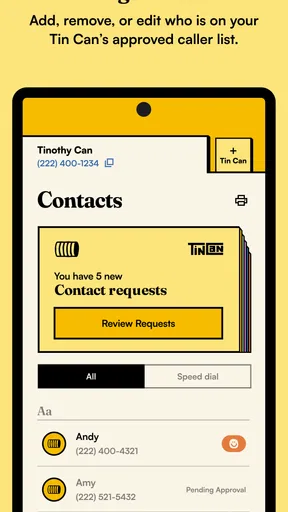
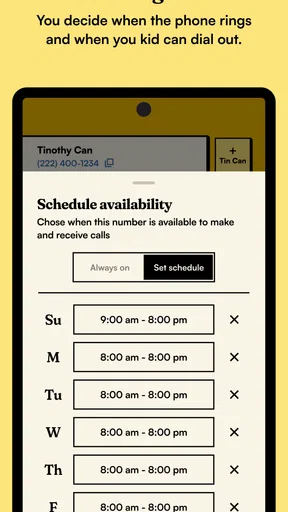
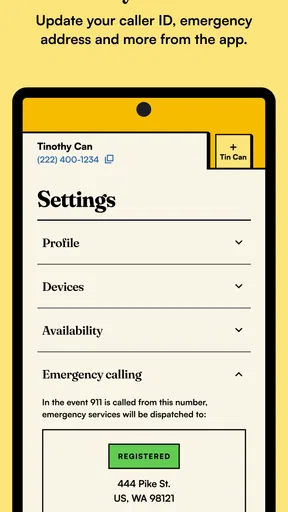
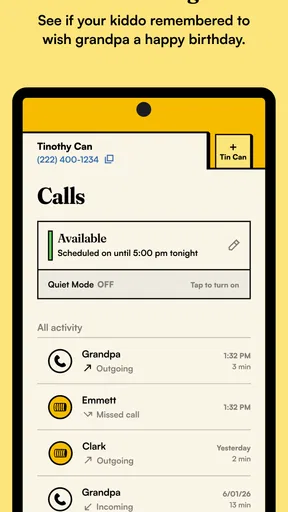
Tin Can is a free parenting app from TinCan, aimed at Everyone, and its role is to accompany the Tin Can phone rather than serve as another general-purpose chat platform. It has reached over ten thousand installs, with an average rating of 3.1 from around twenty ratings and sixteen written reviews. That modest response suggests a niche product: the idea will appeal to some families and curious users, while others may prefer familiar tools that solve communication more directly.
The app was released in May 2025, and version 2.0.1 is the current version. It requires Android 7.0 or later. Those details are useful when deciding whether an older device can take part, particularly if a family plans to use a phone kept for a child or a shared household device. I would check compatibility before planning an activity around it, rather than discovering at the gathering that one person cannot join in.
Because the app is a companion to a particular phone concept, prospective users should think about the whole experience, not just the download. The key decision is whether your family or group wants this style of communication in the first place. If everyone already relies on dependable calls and messages, Tin Can is an optional extra. If the appeal is a more playful, place-based way to interact, it may be worth trying with modest expectations.
How I would decide whether to keep it
I would evaluate Tin Can after using it in the kind of setting it is meant to make more interesting, not after testing it as though it were a standard messenger. A quiet room gives little reason to expect a spontaneous nearby exchange, while a shared event with willing participants is a fairer test. That is an important distinction when interpreting mixed reactions: the experience can depend heavily on whether other people are around and interested.
For families, I would set a simple boundary before handing it to a child: use the app for casual discovery, and use the family’s normal contact method for meeting arrangements, safety concerns, or anything that needs a timely answer. That rule is easy to remember and prevents the novelty from creating a false sense of reliability. It also lets a child enjoy the unusual format without making it responsible for a job better handled by direct communication.
My overall view is that Tin Can is most compelling when the uncertainty is the point. It is not the app I would choose to keep a conversation organized, reach someone across town, or preserve details for later. But for a low-pressure shared outing, it offers a different reason to look up from the usual stream of messages and notice who else is nearby. If that sounds appealing, it is a distinctive experiment; if dependable contact is the priority, conventional messaging remains the better choice.
Pros
- User-friendly interface for easy navigation.
- Seamless integration with multiple platforms.
- Real-time notifications keep you updated.
- Customizable settings enhance user experience.
- Offers a variety of engagement tools.
Cons
- Limited offline functionality.
- Occasional bugs in the latest version.
- Requires frequent updates for stability.
- Lacks advanced analytics tools.
- Some features locked behind paywall.
FAQs for Tin Can
What is Tin Can, and how does it work?
Tin Can is a unique social networking app designed to facilitate anonymous communication between users. It allows users to send messages without revealing their identities, fostering open and honest conversation. The app uses location-based technology to connect people within a certain radius, creating a dynamic space for interaction.
Is Tin Can safe to use for anonymous messaging?
Tin Can prioritizes user safety by implementing features like message encryption and anonymous profiles. However, as with any app, users should exercise caution and be mindful of the information they share. The app also allows users to report inappropriate behavior, helping maintain a respectful community.
What features does Tin Can offer?
Tin Can offers several features designed to enhance user experience, including anonymous messaging, location-based connections, and customizable privacy settings. Users can also block or report others if necessary. The app interfaces are user-friendly, ensuring a smooth and engaging experience for all users.
Are there any age restrictions for using Tin Can?
Yes, Tin Can is intended for users aged 17 and older. The app contains content that may not be suitable for younger audiences, and this age restriction helps ensure that users are mature enough to engage responsibly with the app’s features.
Does Tin Can require an internet connection to function?
Yes, Tin Can requires an internet connection to send and receive messages, as it relies on real-time data transfer. Users should ensure they have a stable internet connection, whether through Wi-Fi or mobile data, to fully utilize the app’s features and maintain seamless communication.


